
Month 6: Personal Connection
How can art help you connect with yourself?
A creative art practice is a great way to strengthen the bond you have with yourself. Creating art can be a therapeutic tool to help you process your thoughts and emotions. Studies have shown that the process of creating can lower cortisol levels, the stress hormone. The best part is that it does not matter what your creative skill level is. Weather you are a beginner or a practiced and skilled artist, you can benefit from the act of creating! A pilot study published on Science Direct in 2017 called Arts in Psychotherapy studied the effects of creating various forms of visual art on the reward pathways in the brain. The study focused on a group of people, some men, some women, some artists, some not, who participated in 3 creative activities. They looked at coloring, doodling, and free drawing. The study found that, “even short spans of artistic activity can improve self perceptions of creative abilities, and, art-making could be a way to regulate mood, addictive behaviors and evoke a sense of pleasure.”
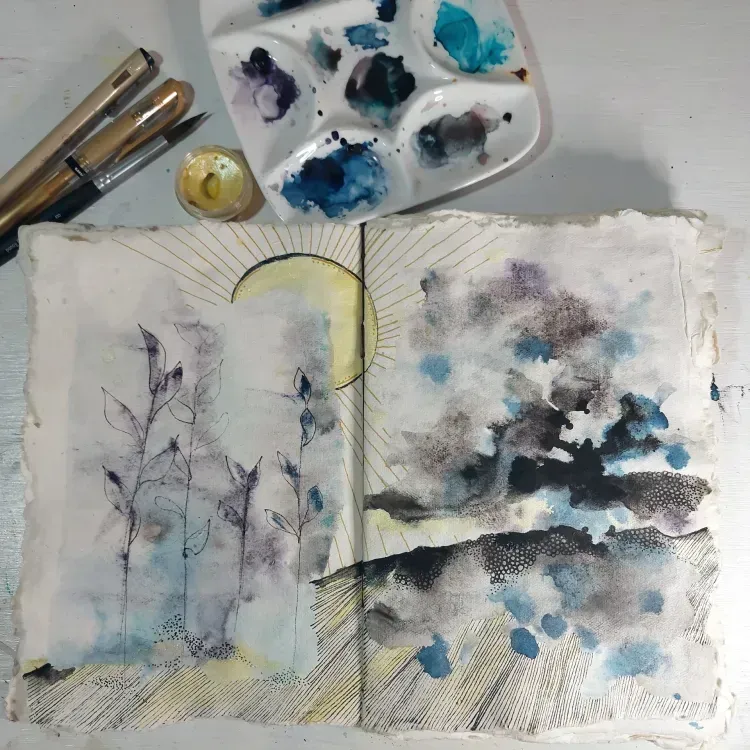
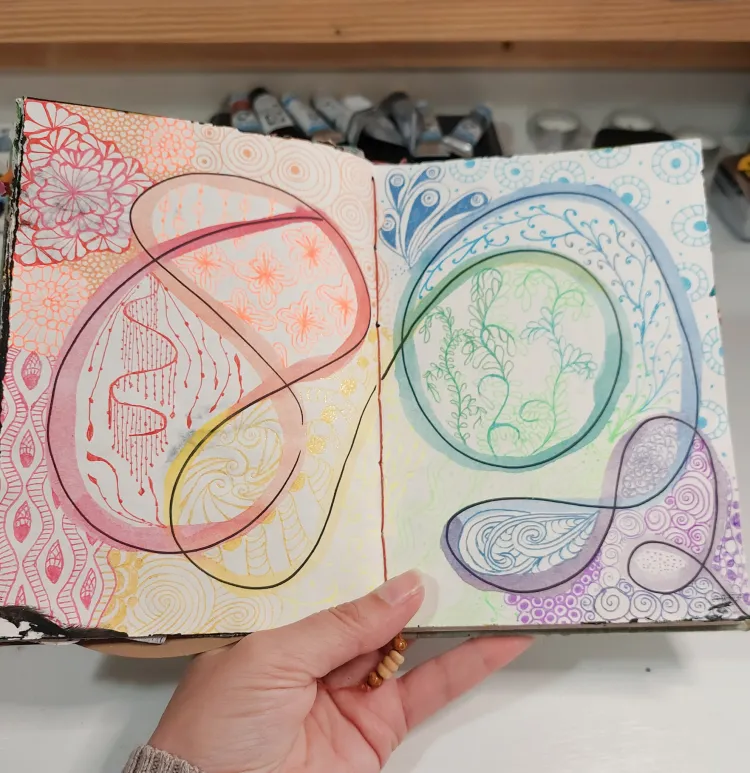
Personally, I have noticed that when I allow myself time to create art, I am better able to tune into my thoughts and emotions. This is particularly true when I am creating in an intuitive way. The process of creating allows me to be fully present with myself. The choices I make tend to reflect the brain space I am in at the moment. For example if I am calm I tend to choose softer colors and my marks are more flowy. If I am stresses or agitated in some way my marks tend to be sharper and my color choices also tend to reflect that darker mood.
What is Intuitive art?
Artist, Cherlye Bannon writes, “Intuitive art is a process of creating art using an inner awareness that is heart centered and does not rely on analysis or head based questions.”
What that means to me is that you allow your process to unfold as you create. You make creative decisions that respond to your previous decisions. You release expectations that your art will be anything in particular and allow it to to become whatever it is. Intuitive art is playful. It is a conversation. There is no right or wrong. It does not need to be beautiful. Intuitive art can lead to self discovery. It can help you tap into and process your thoughts and emotions. The key is to begin to learn how to release your expectations and judgements of what your art should be. Instead allow it to be whatever it is, weather it is ugly or beautiful, representational or abstract, light and airy or dark and broody. Simply follow your curiosity!
Month 6 Prompts
Art-Break
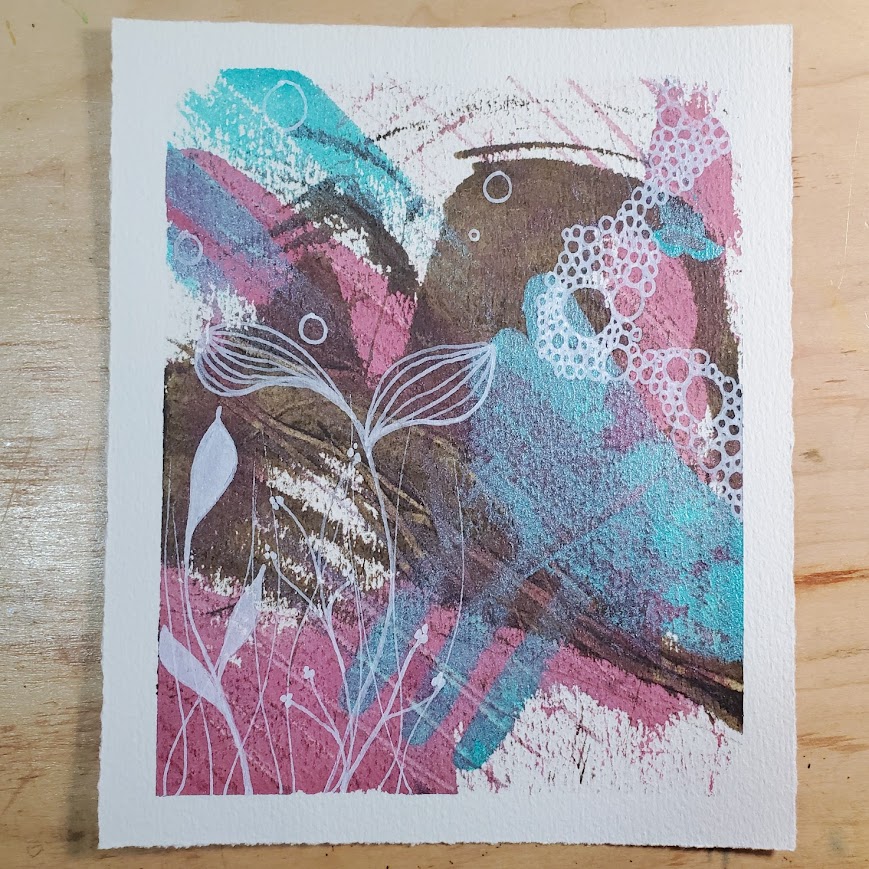
Intuitive Art
This month we will create intuitive art. Sometimes getting started is the hardest part. So, to help get over that hurdle we will begin with a spill. Choose a color or a couple of colors you are drawn to today. I love to use watercolors but you can tin out acrylic paints too. In a small container mix your color with a fair amount of water. Once you have a nice little puddle, spill or pour it on your paper. Let it fall where it wants.
Next play in your puddle. Maybe you tilt the page and let the paint run. Maybe you blow on the puddle with a straw to make it spread. Maybe you blot some up with a paper towel. Follow your curiosity and explore. I love creating textures by sprinkling a little salt in it and letting it dry.
Once your painting is dry you can take a pen or pencil and play with the shapes on your page. I love to use gel pens for this. They come in a wide variety pf colors and they are so smooth to draw with.
Remember to follow your curiosity, play, and explore. Practice releasing any expectations or judgements and you create.
Reflection
In your journal take some time to reflect on how it felt to create in this intuitive way. What surprised you? What did you find difficult? How did it feel in your body to create in this way?
Support your practice this month:
Support Your Art Within Journey
“Creativity requires introspection, self-examination, and a willingness to take risks.”
Eric Maisel